
What You Need to Know
Mauritania is a vast, sparsely populated nation at the crossroads of North Africa and West Africa, where Arab, Amazigh, and sub-Saharan African cultures meet. Stretching from the Atlantic Ocean deep into the Sahara Desert, Mauritania has long been shaped by nomadic traditions, trade routes, and natural resource extraction. Today, the country is navigating economic reform, social change, and security pressures while seeking to translate resource wealth into broader development.
Mauritania at a Glance
Capital: Nouakchott
Population: ~4.8–5 million
Official Language: Arabic
Government: Presidential republic
Economy: Mining- and fisheries-led with agriculture
Key Strengths: Iron ore, fisheries, strategic Atlantic location
Regional Role: Sahel–Maghreb bridge state and Atlantic coastal anchor
Why Mauritania Matters
Mauritania matters because of its geographic position and resource base. Sitting between the Maghreb and sub-Saharan Africa, it plays a connective role in trade, migration, and security across the Sahel. Its iron ore exports and rich fishing grounds contribute to global supply chains, while stability in Mauritania is closely linked to broader Sahelian security dynamics.
Geography and Location
Mauritania is located in West Africa, bordered by the Atlantic Ocean to the west, Western Sahara to the northwest, Algeria to the northeast, Mali to the east and southeast, and Senegal to the southwest.
Much of the country lies within the Sahara Desert, characterized by sand dunes, rocky plateaus, and arid plains. The Senegal River valley in the south supports agriculture and denser settlement, while the long Atlantic coastline underpins fisheries and port activity.
People and Society
Mauritania has a population of approximately 4.8–5 million people, reflecting a mix of Arab-Berber (Bidan), Haratine, and sub-Saharan African communities. This diversity shapes language, culture, and social dynamics.
Arabic is the official language, with French widely used in administration and business. Islam is the predominant religion and plays a central role in social and cultural life.
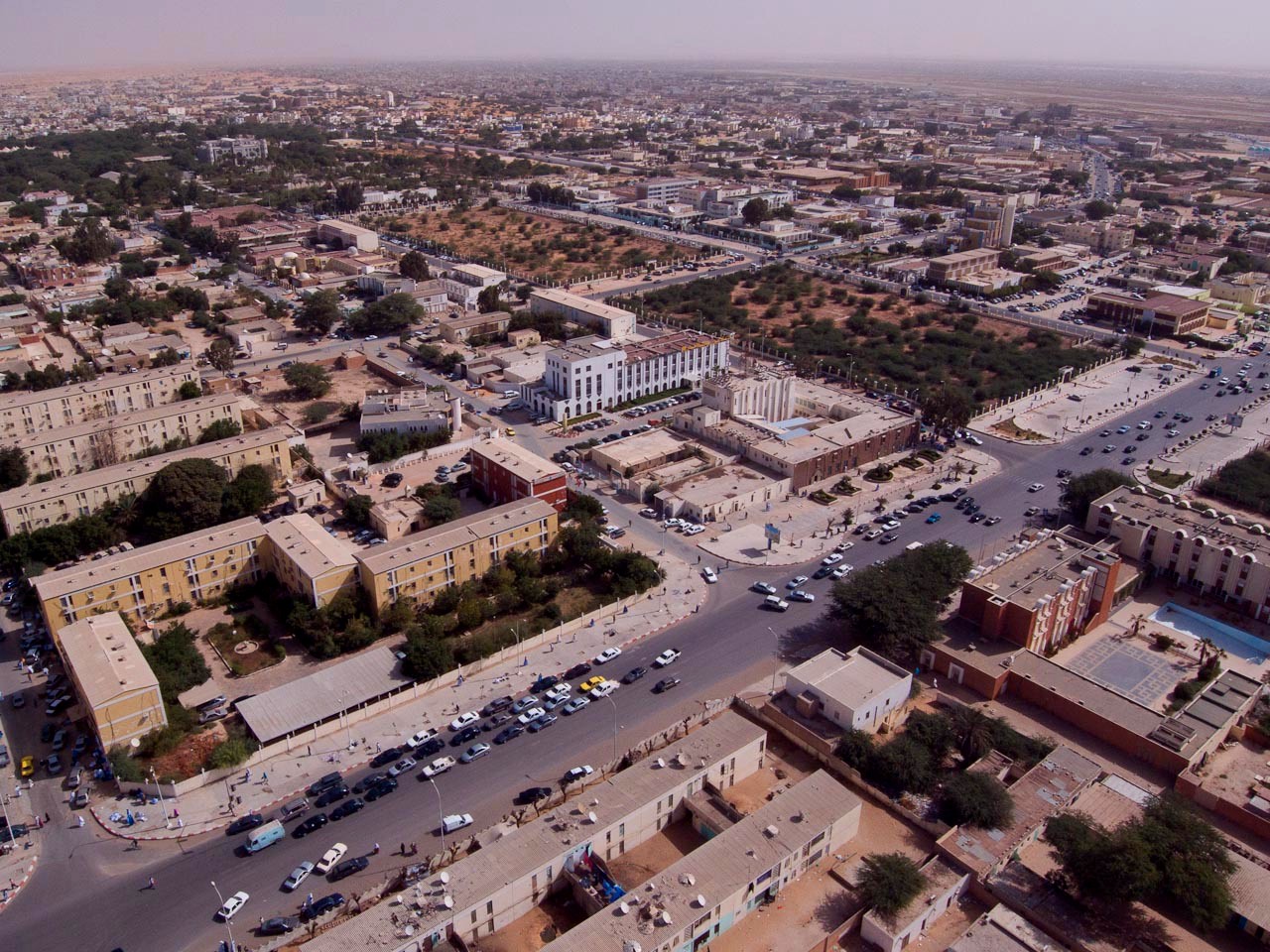
Urbanization has increased rapidly, with Nouakchott growing as the political and economic center.
A Brief Historical Context
The region that is now Mauritania was historically part of trans-Saharan trade networks linking West Africa with North Africa and the Mediterranean. Islamic scholarship and caravan trade flourished in historic towns such as Chinguetti and Ouadane.
France colonized the territory in the early 20th century. Mauritania gained independence in 1960, followed by periods of political instability and military rule. In recent decades, the country has pursued greater political continuity and economic reform, though challenges remain.
Government and Politics
Mauritania is a presidential republic with a strong executive branch. Political life has been shaped by past coups and transitions, alongside efforts to strengthen civilian governance.
Key political issues include economic management, social inclusion, and security, particularly given regional instability in the Sahel.
Economy: Resources, Fisheries, and Reform
Mauritania’s economy is driven by natural resources. Iron ore mining is a major export, alongside gold and copper. The country also possesses some of the world’s richest fishing grounds, making fisheries a critical source of revenue and employment.
Economic priorities include:
Expanding value addition in mining
Strengthening fisheries management
Developing agriculture and livestock
Improving infrastructure and energy access
Reducing poverty and broadening economic participation remain central challenges.
Trade, Diplomacy, and Regional Influence
Mauritania is a member of the African Union and plays an active role in Sahelian security and diplomacy. Its Atlantic ports link landlocked Sahel countries to global markets, while its foreign policy emphasizes regional cooperation and stability.
Tourism and Cultural Heritage
Tourism in Mauritania is limited but culturally rich. Highlights include the ancient desert towns of Chinguetti and Ouadane—part of a UNESCO World Heritage listing—and the Banc d’Arguin National Park, one of Africa’s most important marine and bird sanctuaries.
Adventure and cultural tourism offer long-term potential, though infrastructure remains limited.
Safety and Travel Considerations
Security conditions vary by region, particularly in remote desert areas. Travelers are advised to exercise caution, follow official guidance, and rely on local expertise when traveling outside major cities.
Culture and Daily Life
Mauritanian culture reflects nomadic heritage, Islamic scholarship, and oral tradition. Poetry, music, and storytelling are important cultural expressions.
Daily life often centers on family networks, markets, livestock, and community ties, with strong respect for tradition and hospitality.
Sports and National Identity
Football is the most popular sport in Mauritania and an important source of national pride. The national team’s growing visibility has contributed to a stronger sense of unity and international recognition.